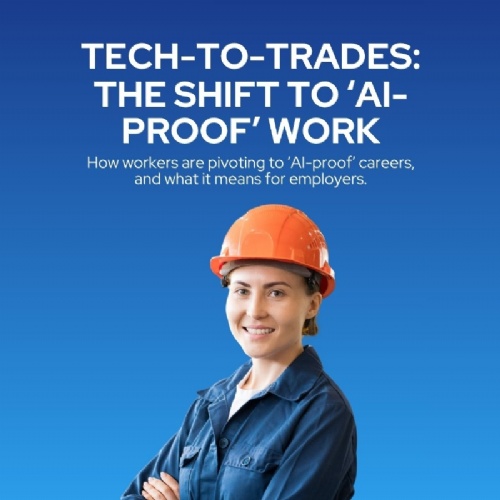
As AI reshapes office-based roles, more workers are looking for careers that feel secure, hands-on, and future-proof. This has led to a noticeable rise in the number of people moving from tech, admin, and digital roles into skilled trades.
A recent
CyberNews report highlighted this trend, showing that young people in the UK are increasingly choosing careers like plumbing, electrical work, and construction over traditional white-collar paths. It’s a clear sign that the workforce is rethinking what ‘stable work’ looks like in an AI-driven world.
This blog explores why the tech-to-trades movement is growing, and what it means for employers.
What’s driving the shift, and why trades feel more future-proof
The move from tech and office roles into trades isn’t random; it’s a response to how work is changing. Several factors are pushing people to rethink their career direction:
AI anxiety and job security
Young people are entering the workforce at a time when AI headlines are everywhere. They’re seeing stories about automation, job changes, and roles being reshaped, and it naturally creates uncertainty.
For many, trades feel safer because they rely on human judgement, physical skill, and on-site problem-solving. Areas where automation has limits.
Fast and clear work routes
One of the biggest reasons young people are turning towards trades is the desire for a simple, structured, and achievable career path. Many are overwhelmed by the complexity of modern office-based routes, with many jobs requiring a long application process, unclear expectations, and unpaid experience.
In comparison, many vocational careers are considered to be more straightforward to join. Apprenticeships, vocational courses, and on-the-job training give workers a clear starting point and destination. This clarity reduces the uncertainty they may feel and gives them confidence.
Consistent demand
Skilled, practical roles are often tied to essential services - heating, electricity, construction, logistics, repairs, and maintenance.
This consistent demand gives workers, especially young people, the confidence that their skills will stay relevant, reassurance that they can build a long-term career, and the feeling that they’re choosing a career with real purpose.
What this means for employers
The switch from tech to trades brings both opportunities and challenges for employers.
- Competition for emerging talent will increase
As more people explore hands-on careers, from young starters to workers switching career paths, employers will be competing for the same pool of new talent. Clear training opportunities, supportive onboarding, and visible progression will be key to attracting them.
- Training and development will matter more
Workers moving from tech or office roles may need structured training to transition effectively. Employers who invest in upskilling will benefit from loyal, long-term talent.
- Recruitment strategies need to adapt
As talent pools shift, employers will need support to reach the right candidates, especially those transitioning from other industries or just starting out in the job market.
Which roles are seeing growth
Across the UK, several trade and hands‑on roles are experiencing increased interest and demand:
- Electricians; driven by EV charging, renewable energy, and smart home installations
- Plumbers and heating engineers; essential services with consistent demand
- Construction and multi‑trade workers; housing, commercial builds, and infrastructure projects
- Mechanical and maintenance engineers; manufacturing, facilities, and industrial sites
- Logistics and warehouse operatives; growth in e‑commerce and supply chain operations
- Technicians and hands‑on technical roles; requiring practical problem‑solving and specialist skills
These roles appeal because they can offer stability, clear progression, and long-term relevance; exactly what many workers are now prioritising.
How we can help
Recruitment agencies play an important role in helping employers adapt to this shift. We speak to job seekers every day, so we understand why more young people are exploring hands-on careers and what they need to feel confident about their next step.
By shaping clear job briefs, highlighting transferable skills, and supporting people who are moving from office roles into practical ones, we help employers reach talent they may otherwise miss.
Our previous blog, ‘
How is AI evolving recruitment’, also looks at this subject from a recruiter's perspective, and what recruiters and hiring managers can expect from AI in our industry.